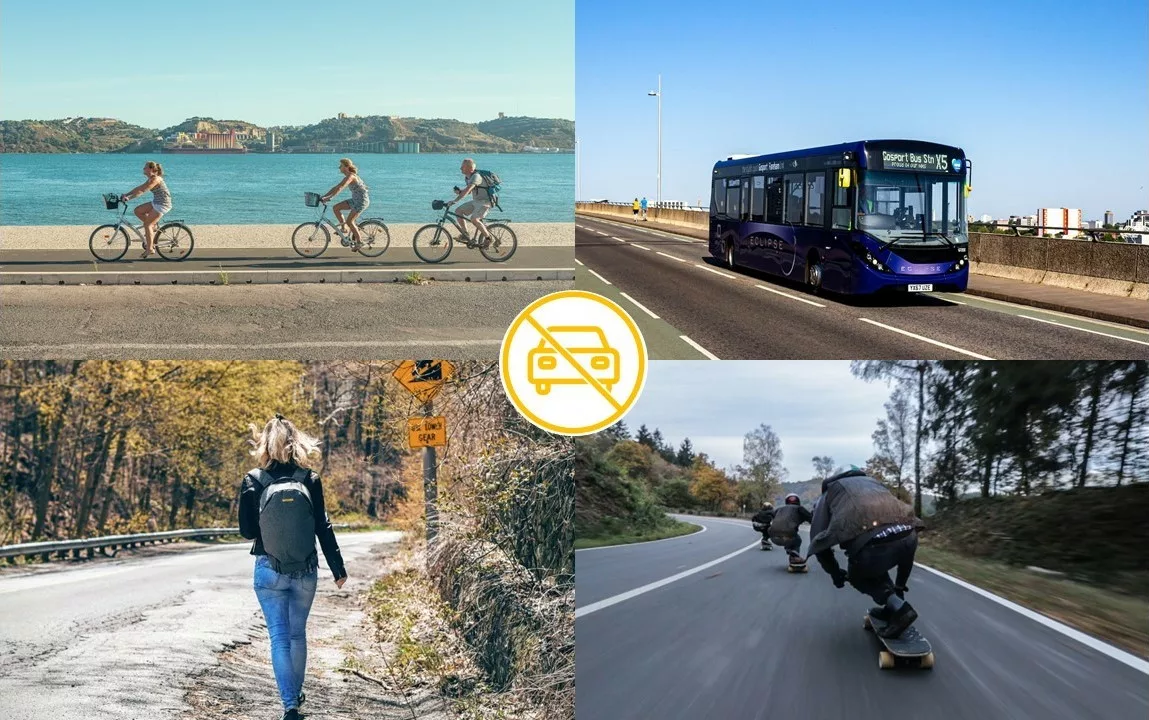
Date: Sunday, 22 September 2024; 24th Anniversary.
Coordinator: World Car-Free Network
Objectives:
World Car Free Day is annually celebrated around the world for the following purposes:
- to raise awareness of the importance of a safer environment and sustainable transportation.
- to raise awareness of the negative impacts of vehicle emissions on air quality and climate change.
- to encourage citizens to drive motor vehicles as little as possible, by giving up driving for a day.
Inception:
World Car Free Day as a global movement began in 2000, when a Europe-wide car-free-day campaign was initiated by the European Commission in 2000.
History:
In the late 1950s, car-free Sundays were started in The Netherlands and Belgium. Since then, sporadic car-free actions have been organized by different organizations in different cities and nations.
In October 1994, a structured call for reducing dependence on cars was issued in a keynote speech by Eric Britton at an international conference held in Toledo (Spain).
Then, a national car-free day was piloted in several cities in Iceland, the United Kingdom, and France. In the late 1990s, the car-free campaign was spread to other European cities.
In 2000, car-free days went global with a World Car-free Day program launched by Carbusters, now the World Car-free Network. The program was also endorsed by the Earth Day Network. It was decided to make the Car-free Day self-standing and held on 22 September 2000, and cities worldwide were invited to participate in. Since then, the car-free campaign was annually observed around the world on September 22.
Why do we mark the World Car Free Day?
Although cars are the most popular and convenient means of road transportation and offer a number of benefits, they may have significant side impacts. First, vehicle emissions are a major source of outdoor air pollution, particularly in cities. There are four major types of pollutants in vehicle emissions: particulate matters, nitrogen oxides, hydrocarbons, and carbon monoxide. These pollutants are harmful to human health and can result in lung diseases, cardiovascular diseases, and increased mortality. According to the WHO, ambient air pollution alone causes some 4.2 million deaths every year.
Second, transport is the fastest growing source of fossil-fuel CO2 emissions which are the largest contributor to climate warming. According to the IPCC, CO2 emissions from global transport sector have more than doubled since 1970, with around 80% of this increase coming from road vehicles. Nowadays, road transport accounts for about 20% of total greenhouse gas emissions in developed countries. In addition, road vehicles are also responsible for a rise in accidental deaths.
World Car Free Day is a massive opportunity for citizens to realize the detrimental effects of vehicle emissions on our lives. It is a great chance for raising awareness about these concerns and helping to reduce greenhouse gas emissions. The campaign highlights numerous benefits of going car-free to citizens — including reduced air pollution and the promotion of walking and cycling in a safer environment.
Official website:
Not available.


Leave a Reply